

Ants keep showing up in your bathroom even after you clean everything. That’s when you start searching for how to get rid of ants in my bathroom for good.
The problem usually isn’t dirt. It’s moisture, scent residue, or a small entry point you haven’t noticed.
In this guide, you’ll learn how to remove the ants, stop the trail, and fix the cause so they don’t keep coming back.
Key Takeaways
- Ants usually show up in bathrooms because of moisture and scent trails, even when the room looks clean.
- Common attractants include leaks, damp corners, soap residue, toothpaste, and fragranced products around sinks, showers, and tiles.
- Tiny ants can enter through small cracks, including gaps around pipes, grout lines, baseboards, tiles, and flooring.
- Killing visible ants only gives short-term relief because the hidden trail and colony can keep sending more ants back.
- The best fix is a complete process: clean ant trails, dry moisture, seal entry points, and use ant bait near active areas.
- If ants keep returning after cleaning, the source is still active, such as a hidden leak, open gap, leftover trail, or nearby colony.
Why Tiny Ants Show Up in Your Bathroom
Tiny ants show up in bathrooms because bathrooms give them what they need: water, scent, shelter, and access.
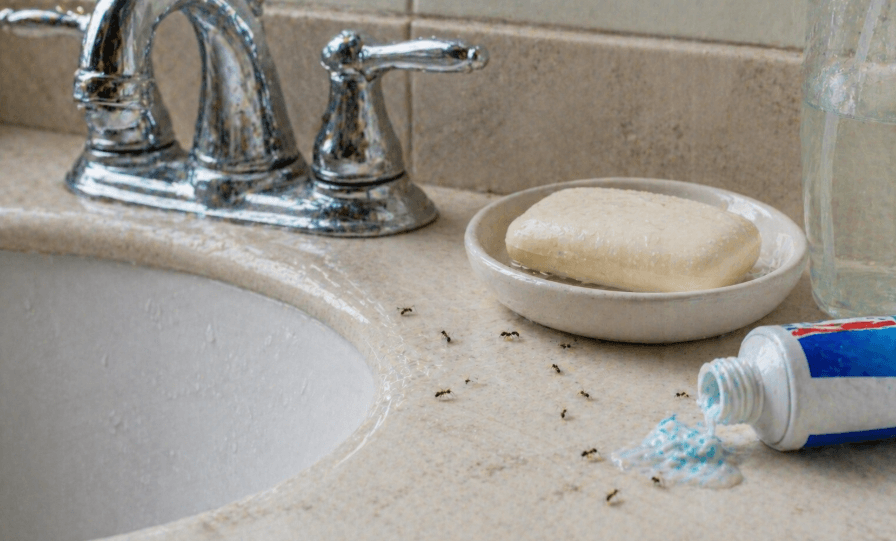
That’s why they may appear near the sink, tub, shower, toilet, window, or under the vanity.
You may not see food anywhere, but ants don’t always need crumbs to stay interested. A slow leak, wet grout line, toothpaste residue, or damp corner can be enough.
Moisture and Hidden Water Sources
- Small water sources attract ants: Check around sinks, showers, tubs, toilets, pipes, and damp corners. Even a slow drip or water trapped under bottles can keep ants coming back. If the bathroom stays damp, ants have a reason to keep using that area.
Soap, Toothpaste, and Scent Residue
- Bathroom residue can leave a trail: Toothpaste, soap, body wash, shampoo, lotions, and scented products can leave residue that ants notice. The surface may look clean, but scent can remain around sinks, counters, shower ledges, and tile edges unless cleaned properly.
Small Cracks and Entry Points
- Ants use tiny openings: Look around pipe holes, cracked grout, loose tile edges, baseboards, cabinet gaps, window frames, and floor corners. Ants don’t need a large opening. Once they find one safe path, they keep using it until it is sealed.
Where Ants Are Coming From
If you’re seeing ants in the bathroom, they are usually coming from somewhere close.
That might be behind a wall, under the floor, through a pipe opening, from outside along the bathroom wall, or from a hidden trail running behind fixtures.
The mistake is only looking at the ants you can see.
You need to follow where they are entering and where they are going.
Common Entry Points Around Pipes and Tiles
- Plumbing gaps are common paths: Check under the sink, behind the toilet, near the bathtub, around shower edges, and where pipes enter walls or floors. These spots often stay slightly damp, which makes them attractive and easy for ants to use.
Hidden Nesting Spots Nearby
- The colony may be close: Ants may be nesting inside wall voids, under flooring, behind tiles, outside along the foundation, or near damp wood. If ants keep returning to one bathroom area, the source may be nearby, not far across the house.
📖 You May Also Like This “Pest Control” Article: How Do I Get Rid of Squirrels Permanently
How to Get Rid of Ants in the Bathroom with 4 Easy Steps
You won’t solve bathroom ants by killing only the ants you see.
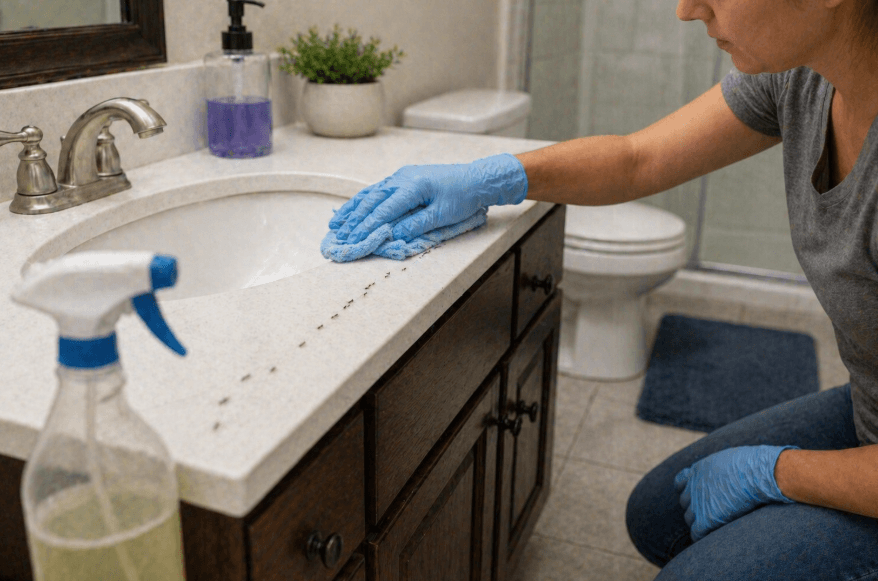
That gives fast relief, but it does not stop the trail or the colony. The better approach is to remove what guides them, remove what attracts them, then block how they enter.
Follow this order.
Step 1: Clean Surfaces and Remove Ant Trails
- Wipe the trail first: Clean sinks, counters, tiles, tub edges, floors, and baseboards where ants travel. Use soapy water or a vinegar-water mix on safe surfaces. Repeat daily for a few days because ants leave scent trails that guide more ants back.
Step 2: Fix Leaks and Dry Out Moisture
- Remove the water source: Check for dripping faucets, leaking pipes, damp cabinets, wet bath mats, water under bottles, and moisture near grout lines. Dry the area fully. If the bathroom stays damp, ants may keep returning even after cleaning.
Step 3: Seal Cracks and Entry Points
- Block the path in: Seal gaps around pipes, baseboards, tiles, grout lines, wall cracks, and cabinet edges. Use caulk or sealant where appropriate. This step matters because ants will keep using the same small openings until the route is closed.
Step 4: Use ant bait to target the colony
- Target the colony, not just the ants: Place ant bait near trails or entry points, but keep it away from kids, pets, and wet areas. Let ants carry it back instead of killing them immediately. Follow the product label carefully for safe use.
Simple rule: cleaning stops the trail, drying removes the reason, sealing blocks the path, and bait targets the source.
📖 You May Also Like This “Pest Control” Article: 9 Smells Bed Bugs Don’t Like (And What Actually Works)
How I Successfully Got Rid of Ants in My Bathroom
I started noticing tiny ants around my sink every morning. At first, I wiped them away and didn’t think much of it. But the next day, they were back again in the same spot.
I cleaned the bathroom properly, thinking that would fix it. It looked spotless, but the ants kept coming back. That’s when I realized cleaning alone wasn’t solving anything.
I took a closer look and found a small damp area under the sink from a slow leak. There was also a tiny gap near the pipe that I hadn’t noticed before.
After that, I followed a more complete approach. I cleaned the surfaces again, fixed the leak, sealed the gap, and placed ant bait near the area.
It didn’t stop overnight, but within a few days, the number of ants dropped a lot. After about a week, they were completely gone.
Looking back, the mistake was thinking a quick clean would fix it. Once I removed the moisture and blocked where they were coming from, the problem finally stopped.
Signs It’s More Than Just a Few Ants
A few ants can be random.
But if they return to the same bathroom area every day, that usually means there is a trail, moisture source, entry point, or colony nearby.
Watch for patterns.
- Same spot every day: Ants returning near the sink, shower, toilet, or pipe area usually means something there is attracting them.
- A visible trail: A line of ants along tile edges, baseboards, or counters means they are following a scent path.
- More ants over time: If the number grows each day, the source is probably still active.
- Activity after cleaning: If cleaning helps briefly but ants return, moisture or entry points may still be present.
- Activity spreading: Ants moving into nearby rooms can mean the problem is growing beyond the bathroom.
Example: If you see three ants near the sink one day, then a trail along the backsplash two days later, don’t just wipe them away. Look for the water source and entry point.
Why Ants Keep Coming Back After Cleaning
You clean the bathroom, and the ants come back.
That usually means cleaning fixed the visible problem but missed the hidden one.
Here’s what may still be happening:
- The scent trail is still there: A quick wipe may not remove the pheromone trail fully.
- Moisture is still present: A slow drip, damp cabinet, wet grout, or puddled water can keep attracting ants.
- Entry points are still open: Ants may still be entering through the same gap near pipes, tiles, or walls.
- The colony is still active: Visible ants are only part of the problem. More ants may keep coming from the source.
- The bait was interrupted: Spraying or killing ants near bait can stop them from carrying it back properly.
Example: If ants disappear after cleaning but return every morning near the faucet, the faucet area may still have moisture or residue they are following.
Simple rule: ants come back when the reason they came is still there.
Still Seeing Ants After Cleaning? Here’s What to Focus On
If ants keep showing up after you clean, don’t start over randomly.
Go back through the problem areas one by one. Most bathroom ant problems continue because one small thing is still missed.
Check these spots:
- Under the sink: Look for slow pipe leaks, damp wood, or gaps where pipes enter the wall.
- Around the shower or tub: Check corners, grout lines, caulk edges, and wet ledges.
- Behind the toilet: Moisture and floor gaps can hide behind the base.
- Along baseboards: Ant trails often run along edges where they feel protected.
- Window or vent areas: Ants may enter from outside through small gaps.
- Bathroom trash or products: Sweet scents, packaging, or sticky residue can attract ants too.
A good example is a bathroom vanity. You may clean the counter perfectly, but if there is a damp spot inside the cabinet under the sink, ants still have a reason to stay nearby.
FAQs
Why Do I Keep Seeing Ants in My Bathroom?
You keep seeing ants in your bathroom because something is still attracting them. The most common reasons are moisture, scent residue, open entry points, or an active colony nearby.
How Do I Get Rid of Ants in the Bathroom Fast?
Start by cleaning ant trails, drying moisture, checking for leaks, sealing gaps, and placing ant bait near activity areas. This works better than only spraying or wiping the visible ants.
Will Cleaning Alone Remove Tiny Ants?
No, cleaning alone usually removes only the ants and trails you can see. If moisture, entry points, or the colony remain, ants can return to the same bathroom area again.
Are Ants Coming From the Drain?
Sometimes ants appear near drains because drains are damp, but they often enter through nearby gaps around pipes, tiles, baseboards, or walls. Check the whole area before assuming the drain is the source.
How Long Does It Take to Get Rid of Bathroom Ants Completely?
You may see fewer ants within a few days if you clean trails, remove moisture, seal gaps, and use bait correctly. Full control may take about a week or more, depending on the colony source.