

Ceramic tile floors can still look dull or sticky even after mopping. That’s usually why people start searching for how to clean ceramic tile floors the right way.
The problem is often not the tile itself. Dirty mop water, leftover cleaner, loose dirt, or stained grout can leave the floor looking cloudy, no matter how much you clean it.
In this guide, you’ll learn how to clean ceramic tile floors step by step, what cleaners work best, and how to remove grime without leaving streaks or residue behind.
Key Takeaways
- Ceramic tile floors often look dull because of residue, dirty mop water, loose dirt, or stained grout, not because the tile is damaged.
- The best cleaning order is simple: sweep or vacuum first, mop with a mild cleaner, rinse with clean water, and dry the floor.
- Warm water with mild dish soap or a pH-neutral cleaner is usually enough for regular ceramic tile floor cleaning.
- Use a microfiber mop and change dirty mop water often so you lift grime instead of spreading it back across the tile.
- Grout needs separate cleaning because it is porous and can hold stains, soap residue, moisture, and dirt that regular mopping misses.
- Ceramic tile shines best when it is clean, rinsed, and dry, not covered with extra cleaner, waxy polish, or leftover residue.
How to Clean Ceramic Tile Floors
The best way to clean ceramic tile floors is to start dry, then mop lightly, then rinse and dry. Most streaks happen because dirt gets pushed around or soap residue stays on the tile.
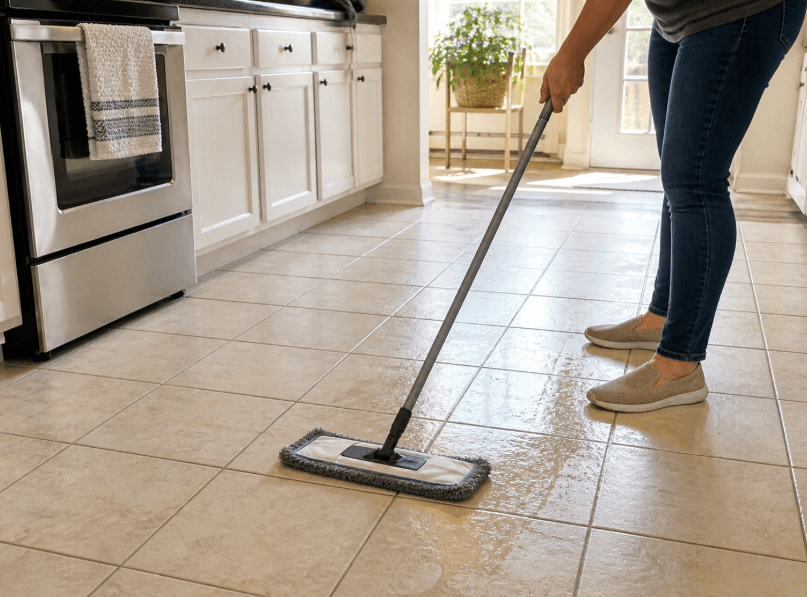
Use this simple order:
- Sweep or vacuum first: Remove loose dirt, dust, crumbs, and grit before mopping. If you skip this, the mop can drag dirt across the tile and leave a dull finish.
- Use warm water and mild cleaner: Mix warm water with a few drops of mild dish soap or a pH-neutral floor cleaner. You don’t need a strong chemical for regular cleaning.
- Use a microfiber mop: Microfiber picks up dirt better and leaves less water behind than a string mop.
- Change dirty water often: If the mop water turns cloudy, replace it. Dirty water just spreads grime back onto the floor.
- Rinse with clean water: A quick rinse helps remove leftover soap so the tile does not look hazy.
- Dry the floor: Use a clean towel or dry mop to prevent streaks, water spots, and slippery areas.
Simple rule: sweep first, mop lightly, rinse clean, and dry.
How to Mop Ceramic Tile Floors
- Mop in small sections: Work one area at a time using a damp microfiber mop, not a soaking wet one. Rinse the mop often, change dirty water quickly, and dry each section after mopping so the ceramic tile floor does not end up cloudy, sticky, or streaky.
How to Clean Ceramic Tile Floors Naturally (Including Vinegar Cleaning)
- Start with simple cleaners first: Warm water and a small amount of mild dish soap are enough for most ceramic tile floors. Mop gently, rinse with clean water, and dry the floor well so residue does not leave the tile looking dull or streaky.
- Use vinegar only for tougher buildup: For stubborn grime or light haze, mix about 1 cup of white vinegar with 1 gallon of warm water. Mop lightly, then rinse the floor with clean water afterward. Avoid using vinegar too often because acidic cleaners can slowly weaken grout, especially if the grout is unsealed.
Can You Steam Clean Ceramic Tile Floors
- Yes, but use care: You can steam clean ceramic tile floors if the tile and grout are in good condition. Steam can loosen stuck-on dirt without strong chemicals, but avoid using it on cracked grout, loose tiles, or unsealed surfaces because moisture can get underneath.
📖 You May Also Like This “Cleaning” Article: How Much to Power Wash a House?
What Is the Best Cleaner for Ceramic Tile Floors?
The best cleaner for ceramic tile floors is usually warm water with mild dish soap or a pH-neutral tile cleaner.
You want something that removes dirt without leaving residue or damaging grout.
Good options include:
- Warm water: Best for light daily cleaning and quick touch-ups.
- Mild dish soap: Good for greasy kitchen tile or everyday buildup. Use only a few drops.
- pH-neutral floor cleaner: A safer regular option for ceramic tile and grout.
- Baking soda paste: Helpful for grout lines or small stained spots.
- Vinegar solution: Useful sometimes, but not for daily cleaning and not ideal for unsealed grout.
Avoid these when possible:
- Bleach: Can discolor grout and is usually too harsh for routine cleaning.
- Ammonia: Can leave strong fumes and may dull some surfaces.
- Too much soap: More soap does not mean cleaner floors. It often leaves a sticky film.
Simple rule: the best cleaner is mild, low-residue, and easy to rinse away.
How to Deep Clean Ceramic Tile Floors
Deep cleaning ceramic tile floors is mostly about removing built-up grime, not scrubbing harder everywhere.
Start with the dirtiest areas first, like kitchen walkways, bathroom corners, grout lines, and spots near doors.
- Step 1: Sweep or vacuum well: Remove all loose dirt so it doesn’t turn into muddy residue when wet.
- Step 2: Apply mild cleaning solution: Use warm water with dish soap or a pH-neutral cleaner. Let it sit for a few minutes on dirty areas.
- Step 3: Scrub problem spots gently: Use a soft-bristled brush or nylon pad for stuck-on grime. Avoid metal brushes because they can scratch.
- Step 4: Clean grout separately: Use baking soda paste on grout lines, let it sit for 15 to 30 minutes, then scrub with a soft brush.
- Step 5: Rinse with clean water: This removes cleaner residue that can make tile look dull.
- Step 6: Dry the floor fully: A clean towel or dry mop helps prevent haze, streaks, and water marks.
Example: If your ceramic kitchen floor still feels sticky after mopping, the issue is probably leftover cleaner or dirty mop water. Rinse with clean water and dry it before adding more cleaner.
Simple rule: deep cleaning works best when you loosen grime, rinse residue, and dry the floor properly.
How to Clean Ceramic Tile Grout
Ceramic tile can look clean while the grout still looks dark, stained, or dirty. That happens because grout is more porous than tile, so it holds dirt, soap residue, moisture, and stains more easily.
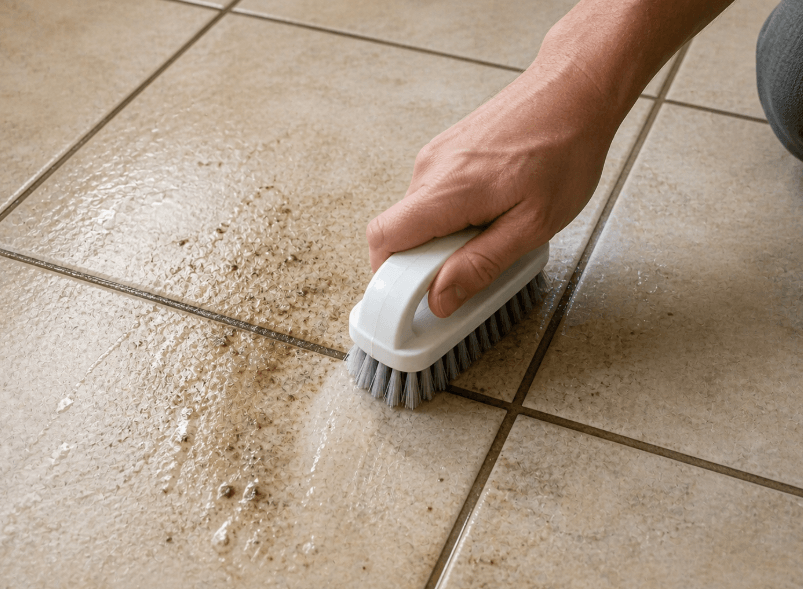
Start gently before using anything strong.
- Make a baking soda paste: Mix baking soda with a little water until it forms a thick paste.
- Apply it to grout lines: Spread the paste over stained grout and let it sit for 15 to 30 minutes.
- Scrub with a soft brush: Use a grout brush or an old toothbrush. Avoid metal brushes because they can damage grout.
- Rinse with clean water: Wipe away the paste fully so no residue stays behind.
- Dry the grout: Use a towel or dry mop to remove moisture and prevent new stains.
Simple rule: clean the grout separately because mopping alone usually won’t reach deep grout stains.
📖 You May Also Like This “Cleaning” Article: How to Wash a Minky Blanket?
How to Clean New, Textured, or Unglazed Ceramic Tile Floors
New, textured, and unglazed ceramic tile floors need a little extra care because dirt can settle into surface grooves or porous areas.
The cleaning method is still simple, but you need to avoid leaving residue behind.
- New ceramic tile floors: Sweep first, then mop with warm water and mild cleaner to remove dust, grout haze, or installation residue.
- Textured ceramic tile floors: Use a soft brush or microfiber mop that can reach into grooves where dirt collects.
- Unglazed ceramic tile floors: Use a pH-neutral cleaner and avoid too much water, because unglazed tile can absorb moisture more easily.
- Rinse well: Textured and unglazed surfaces can hold cleaner residue, so always rinse with clean water.
- Dry fully: Drying helps prevent haze, streaks, and water marks.
Simple rule: the rougher or more porous the tile, the more important rinsing and drying become.
How to Clean a Ceramic Tile Shower Floor
A ceramic tile shower floor collects soap scum, body oils, hard water spots, and moisture. That’s why it can feel slippery or look dull even when you rinse it often.
Clean it like a wet-area surface, not a regular floor.
- Rinse loose residue first: Use warm water to loosen soap film and surface dirt.
- Apply mild cleaner: Use dish soap, pH-neutral tile cleaner, or a bathroom-safe cleaner.
- Scrub grout and corners: Use a soft brush around grout lines, drain edges, and corners where buildup collects.
- Rinse completely: Leftover cleaner can make the shower floor slippery or cloudy.
- Dry or ventilate well: Use a towel, squeegee, fan, or open door to reduce moisture.
Simple rule: soap scum and moisture are the main problems, so rinse and dry well after cleaning.
How to Shine or Polish Ceramic Tile Floors
Ceramic tile usually doesn’t need heavy polishing. If it looks dull, the problem is often residue, dirty mop water, or leftover cleaner sitting on the surface.
So before trying to polish, clean the floor properly first.
- Remove loose dirt first: Sweep or vacuum so grit doesn’t scratch or dull the surface.
- Mop with mild cleaner: Use warm water and a small amount of dish soap or pH-neutral cleaner.
- Rinse with clean water: This step matters most if the floor looks hazy after mopping.
- Dry with a clean towel: Drying helps bring back a cleaner shine and prevents streaks.
- Avoid waxy polish: Many ceramic tiles don’t need wax, and polish can leave buildup or make floors slippery.
Simple rule: ceramic tile shines best when it’s clean, rinsed, and dry, not covered with extra product.