


A minky blanket feels so soft that washing it almost feels risky. That’s why many people search for how to wash a minky blanket without ruining the texture.
The problem is that heat, harsh detergent, and fabric softener can quickly make the fibers feel rough or matted. One bad wash is sometimes enough to change the softness.
In this guide, you’ll learn how to wash and dry a minky blanket the right way so it stays soft, fluffy, and comfortable longer.
Key Takeaways
- Minky blankets are washable, but they need a gentle routine to keep the plush fibers soft and smooth.
- Cold water is the safest choice, because hot water can damage the soft polyester texture and make it feel rough.
- Wash a minky blanket by itself to prevent lint from towels, cotton clothes, fleece, or fuzzy fabrics from sticking to it.
- Use a small amount of mild liquid detergent, and avoid pods, powder, fabric softener, and dryer sheets that can leave residue.
- Dry without heat whenever possible, since high heat can flatten, roughen, or damage the delicate fibers.
- Wash every 2 to 4 weeks for regular use, or sooner if the blanket gets sweaty, spilled on, used by pets or kids, or starts to smell off.
Can You Wash a Minky Blanket?
Yes, you can wash a minky blanket, but the routine has to be gentle. The main goal is to clean it without damaging the soft polyester fibers. Most minky blankets lose their softness because of heat, fabric softener, dryer sheets, harsh detergents, or lint transfer from other clothes.
Simple rule: yes, Minky blankets are washable, but they need a gentle, low-heat routine.
📖 You May Also Like This “Cleaning” Article: How Much to Power Wash a House?
How to Wash a Minky Blanket
The best way to wash a minky blanket is to keep the process simple and gentle.
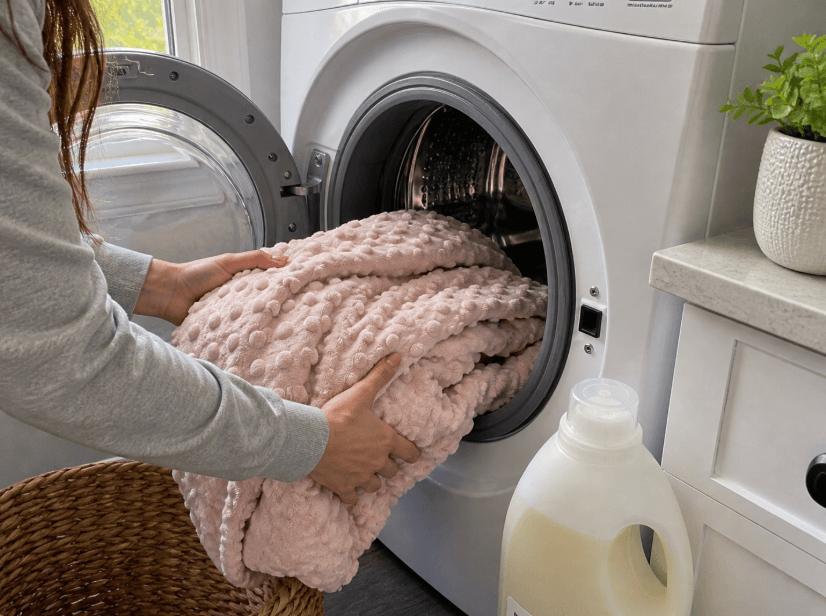
You’re not trying to deep-scrub it. You’re trying to clean it without damaging the soft fibers.
- Step 1: Shake off loose dirt: Before washing, shake the blanket outside or over a laundry basket to remove crumbs, dust, or pet hair.
- Step 2: Wash it alone: Put the minky blanket in the washing machine by itself to prevent lint transfer.
- Step 3: Use cold water: Choose cold water so the fibers stay soft and smooth.
- Step 4: Pick a gentle cycle: Use the delicate or gentle setting to reduce friction.
- Step 5: Add mild liquid detergent: Use a small amount. Too much detergent can leave residue and make the blanket feel less soft.
- Step 6: Skip softener and dryer sheets: These can coat the fabric and ruin the plush feel.
Example: If your minky blanket smells a little musty, don’t use hot water or extra detergent. Wash it alone with cold water, mild detergent, and a gentle cycle first.
Simple rule: wash cold, wash alone, use gentle detergent, and skip anything that coats the fabric.
📖 You May Also Like This “Cleaning” Article: How to Clean Ceramic Tile Floors?
How to Dry a Minky Blanket
Drying is where minky blankets usually get damaged.
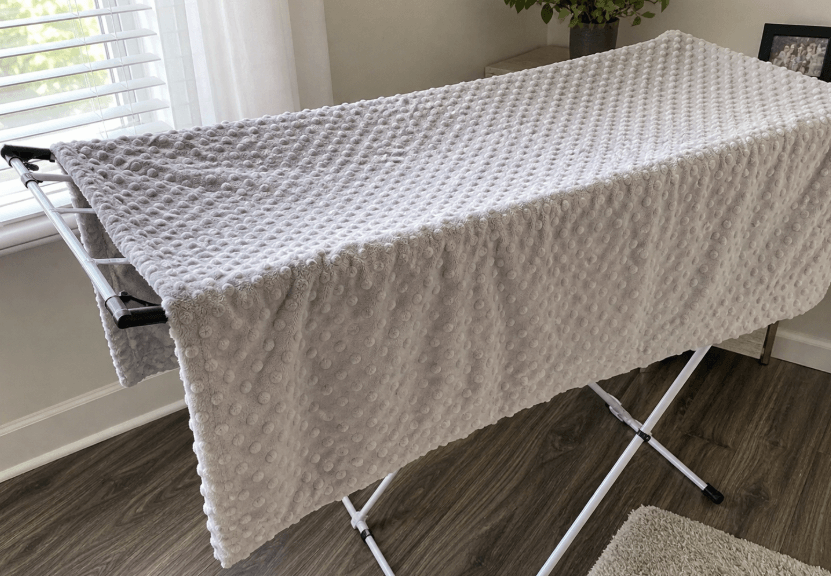
The biggest mistake is using high heat. Heat can melt or roughen the soft fibers, which makes the blanket feel matted instead of smooth.
- Air dry when possible: Lay the blanket flat or hang it over a drying rack so it dries gently.
- Use no heat in the dryer: If you use a dryer, choose air fluff or no heat only.
- Avoid dryer sheets: Dryer sheets can coat the fibers and reduce the soft feel.
- Do not iron it: Direct heat can damage the plush texture.
- Shake it after drying: A quick shake helps loosen the fibers and bring back some fluff.
How Often Should You Wash a Minky Blanket?
You don’t need to wash a minky blanket after every use unless it gets dirty, sweaty, or spilled on.
Washing too often can wear down the softness over time, especially if the blanket is exposed to friction, detergent buildup, or heat.
- For regular use: Wash it every 2 to 4 weeks if you use it often on the couch or bed.
- For kids or pets: Wash it more often if it collects crumbs, pet hair, drool, or spills.
- For light use: Wash it only when it smells off or looks dirty.
- After spills: Spot clean first if the mess is small, then wash fully if needed.
- Before storage: Wash and dry it completely before putting it away to avoid musty smells.
Simple rule: wash it when it actually needs cleaning, but always use the gentle method so it stays soft longer.