


Your pool can look clean one day, then turn cloudy, dull, or unbalanced a few days later.
That’s usually when how to maintain an inground pool becomes a real concern.
Most problems start small: low chlorine, poor circulation, dirty filters, or skipped cleaning.
Then they build up and make the pool harder to fix.
In this guide, you’ll learn the simple routine that keeps your inground pool clean, clear, and easier to manage.
Key Takeaways
- Inground pool problems usually build up slowly, often from low chlorine, poor circulation, dirty filters, or skipped cleaning.
- The basic maintenance routine is simple: test the water, run circulation, skim debris, brush surfaces, clean the filter, and adjust chemicals.
- Chlorine, pH, and alkalinity are the key water levels that keep your pool clear, balanced, and safe to use.
- Daily pump circulation matters, and most inground pools need at least 6–8 hours of filtering to keep water moving properly.
- Physical cleaning is just as important as chemicals, so skim daily, brush weekly, vacuum regularly, and clean the filter before water turns dull.
- Consistent maintenance is cheaper and easier than fixing problems later, with most homeowners spending around $100–$300 per month on basic upkeep.
What Maintenance Does an Inground Pool Need?
Most pool problems don’t come from one big mistake. They come from skipping small things that keep the water stable.
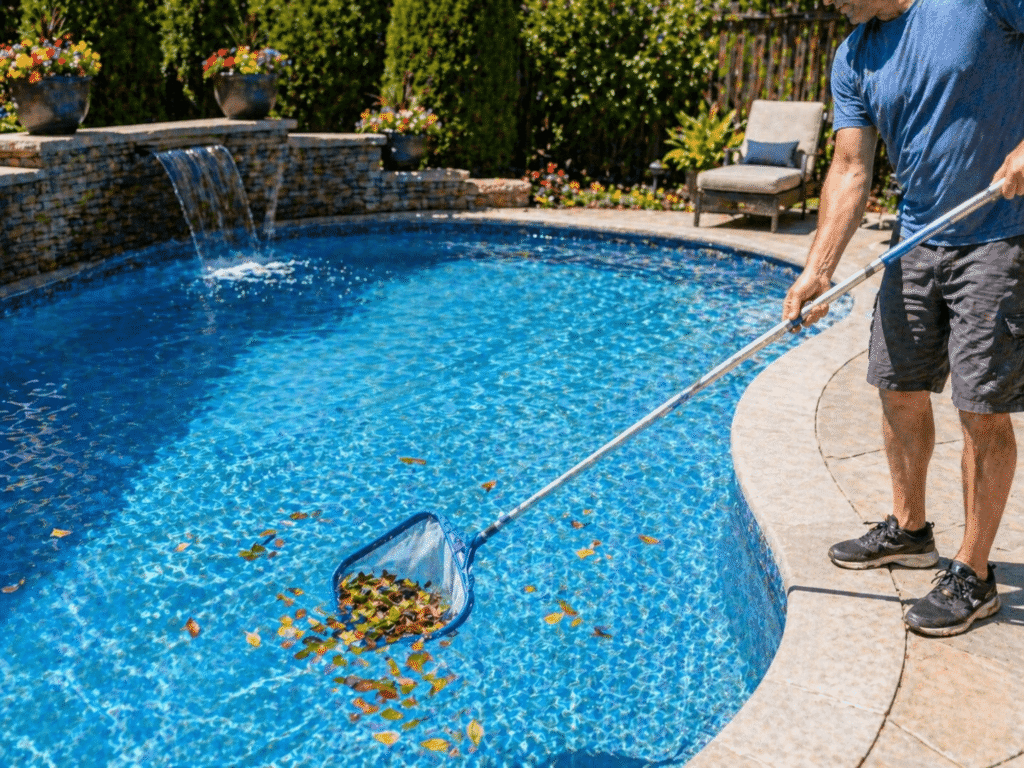
Here’s what actually needs to happen on a regular basis:
- Test and balance the water (2–3 times a week): Check chlorine, pH, and alkalinity. If chlorine drops or pH drifts, the water turns cloudy fast. Balanced water is what keeps everything else working.
- Run the filter system daily (6–8 hours minimum): Circulation is what keeps chemicals evenly spread. Without it, even “perfect” water readings won’t stay stable for long.
- Skim, brush, and vacuum regularly: Leaves, dust, and algae stick to walls and floors. Skimming daily and brushing weekly prevents buildup that turns into bigger issues.
- Clean the filter (weekly or biweekly): A dirty filter slows everything down. Water looks dull even if the chemicals are fine because debris isn’t being removed properly.
- Shock the pool when needed: After heavy use, rain, or cloudy water, shocking helps reset chlorine levels and clear contaminants.
Think of it like this: if you keep up with these basics, your pool stays predictable. Miss them, and things spiral quickly.
How to Maintain an Inground Pool
This is where most pool owners get stuck. You know the basics, but you’re not sure what to do first, how often to do it, or what actually matters. So here’s a simple routine you can follow. No guessing, no overthinking:
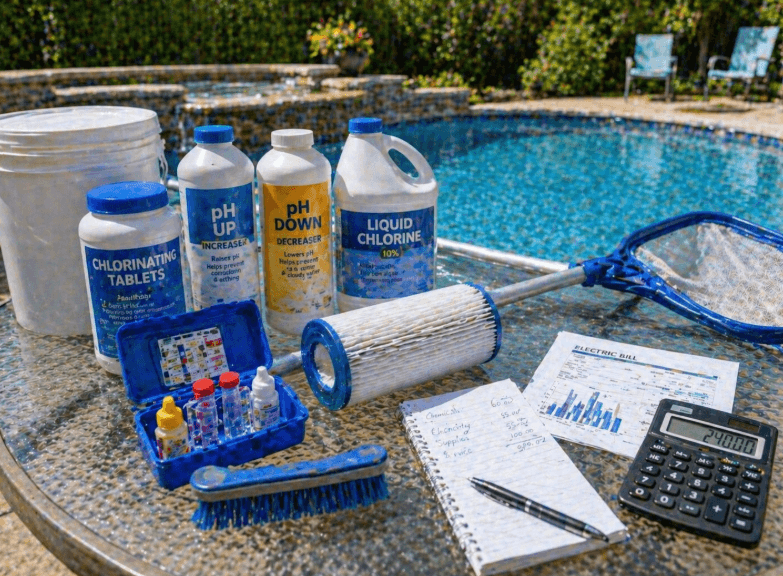
Step 1: Test the water and adjust it
- Check chlorine, pH, and alkalinity using a test kit or strips
- Keep chlorine steady and pH in the normal range so water stays clear
- Adjust small imbalances right away instead of waiting
Example: If chlorine drops even a little, the water may still look fine today, but it can turn cloudy in a day or two.
Step 2: Run your pump and filter daily
- Run the system at least 6–8 hours a day
- Make sure water is moving across the entire pool
- Check for weak flow or clogged baskets
Think of this as the engine of your pool. Without proper circulation, everything else starts failing.
Step 3: Skim and clean the surface
- Remove leaves, bugs, and debris daily
- Empty skimmer baskets so the flow doesn’t get blocked
- Pay attention after windy days or storms
Small debris left behind turns into bigger water problems later.
Step 4: Brush and vacuum the pool
- Brush walls and steps at least once a week
- Vacuum the floor to remove settled dirt and algae
- Focus on corners and areas with low circulation
Even if the water looks clean, buildup on surfaces can slowly affect water quality.
Step 5: Clean or backwash the filter
- Rinse or backwash based on your filter type
- Do it weekly or when pressure builds up
- Replace filter media when needed
A dirty filter makes clean water look dull, even when your chemicals are balanced.
Step 6: Shock the pool when needed
- Shock after heavy use, rain, or cloudy water
- Do it at night for better results
- Let the filter run to clear everything out
This resets the water when regular chlorine isn’t enough.
Step 7: Stay consistent with a simple routine
- Quick checks during the week
- Deeper cleaning once a week
- Adjust based on weather and usage
This is the part that changes everything. When you stay consistent, your pool stays predictable. If you follow these steps, you’re not just reacting to problems anymore. You’re preventing them before they even start.
📖 You May Also Like This “Swimming Pool” Article: How to Use Baking Soda for Pool Maintenance
How Hard Is It to Maintain an Inground Pool?
It feels hard when you don’t have a routine.
That’s usually where people struggle. They test randomly, clean when it looks dirty, and adjust chemicals without a clear system. That’s when maintenance turns into constant guessing.
In reality, it’s not complicated once you break it down:
- Most tasks take 10–20 minutes a day- Skimming, quick checks, and running the system don’t take much time when done consistently.
- The learning curve is the real challenge- Understanding what chlorine, pH, and filtration actually do takes a bit of time. But once you get it, decisions become simple.
- Problems happen when routines break- Miss a few days, and you’re dealing with cloudy water or algae. That’s when it feels overwhelming.
- Consistency makes it easy- Same checks, same timing, same process. No guessing, no stress.
So is it hard? At the start, a little. But once you follow a clear routine, it becomes something you can manage without thinking too much about it.
📖 You May Also Like This “Swimming Pool” Article: How to Properly Close Your Pool
How Much Does It Cost to Maintain an Inground Pool?
This is where most people get surprised. Not because it’s extremely expensive, but because small costs add up over time.
On average, here’s what you’re looking at:
- Chemicals: $30–$100 per month- Chlorine, pH balancers, and shock treatments are the main ongoing costs. Usage depends on the weather and pool size.
- Electricity: $30–$80 per month- Running the pump daily adds to your energy bill. Efficient pumps can lower this over time.
- Cleaning and maintenance supplies: $20–$50 per month- Skimmer nets, brushes, and occasional filter replacements or cleaning materials.
- Occasional repairs or parts- Filters, pumps, or liners may need replacement over time, which can increase costs in certain months.
- Professional service (optional): $80–$150 per visit- Some owners prefer weekly service instead of doing it themselves.
In simple terms, most homeowners spend $100 to $300 per month maintaining an inground pool.
The key thing to understand: regular maintenance is cheaper than fixing problems. A neglected pool can cost far more to recover than keeping it clean in the first place.