

Closing your pool seems simple until you open it months later and find green or cloudy water.
That’s why knowing how to properly close your pool matters more than most people think.
Small mistakes during closing can sit there all winter and turn into expensive cleanup later. The timing, water balance, and winter prep all play a part.
In this guide, you’ll learn when to close your pool, what you need, and the exact steps to keep the water cleaner and easier to open next season.
Key Takeaways
- Closing your pool properly prevents spring problems like green water, cloudy water, stains, bad smells, and costly cleanup.
- The best time to close a pool is when water stays below 60°F (15°C), because algae grows more easily in warmer water.
- Clean the pool before closing, since leaves, dirt, and debris left under the cover can stain the water and feed algae all winter.
- Balance pH, alkalinity, and sanitizer before winterizing, so the water stays stable while the pool sits unused for months.
- Shock first, circulate, then add algaecide or winter chemicals for better protection during the off-season.
- Protect the plumbing, equipment, and cover setup, including blowing out lines, draining equipment, securing the cover, and cleaning the salt cell if you have a saltwater pool.
When to Close a Pool?
This is where most people mess up. Close too early, and you trap warm water that helps algae grow. Close too late, and you risk freezing damage.
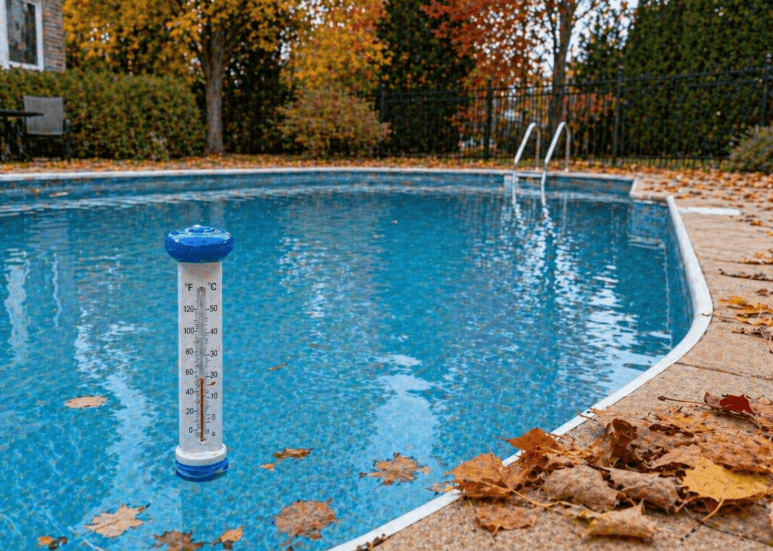
So timing matters more than most people think.
- Wait until water temperature drops below 60°F (15°C): Algae growth slows down at this point. Closing earlier is one of the biggest reasons pools open green.
- Watch your local weather, not just the calendar: It’s not about a specific date. It’s about consistently cooler temperatures.
- Avoid closing right after heavy use or storms: Give your pool time to settle and rebalance before shutting it down.
- Above-ground pools follow the same rule: The structure changes, but timing stays the same.
Example: If it still feels warm outside during the day, your pool isn’t ready to close yet. Waiting a bit longer usually saves you a lot of cleanup later.
Bottom line: close your pool when the water is cold, not when summer ends.
What Do You Need to Close a Pool?
This is where people either overcomplicate things or miss something important.
You don’t need everything. But you do need the right basics.
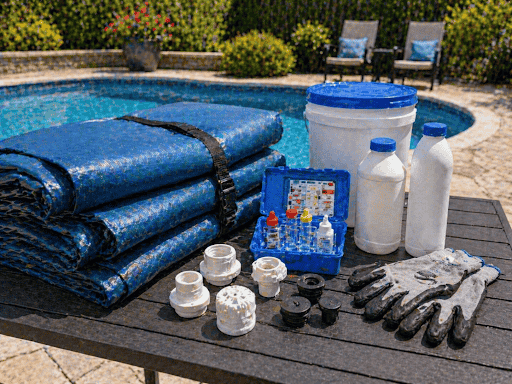
- Pool test kit- To make sure the water is balanced before closing. Skipping this leads to problems sitting all winter.
- Shock treatment (chlorine)- Helps kill bacteria and contaminants before the pool sits unused.
- Algaecide- Prevents algae growth during the off-season.
- Pool cover (solid or safety cover)- Keeps debris out and protects water quality.
- Winterizing plugs and skimmer protection- Prevents water from entering pipes and freezing.
- Pump or blower (for lines)- Used to clear water from plumbing lines to avoid freeze damage.
- Optional closing kit- Bundles chemicals together, but you still need to use them correctly.
Example: You can have all the right chemicals, but if your water isn’t balanced first, you’ll still open to a problem pool. Think of it like preparing your pool to “sit still” for months. Everything you do now shows up later.
How Much Shock or Algaecide Do You Need to Close a Pool?
This is where people either underdose or go overboard.
- Shock: typically 1–3 lbs per 10,000 gallons- Enough to raise chlorine levels and clean the water before closing.
- Algaecide: follow label, usually 8–16 oz per 10,000 gallons- Helps prevent algae from forming while the pool is covered.
- Always adjust based on current water condition- Dirty or cloudy water may need more treatment before closing.
- Don’t add everything at once- Shock first, let it circulate, then add algaecide.
Example: If your pool is slightly cloudy, shocking first and circulating overnight before adding algaecide gives better results.
Key idea: clean and stabilize before you close, not after you open.
📖 You May Also Like This “Swimming Pool” Article: How to Maintain an Inground Pool?
How to Close a Pool for Winter
This is the step where spring problems are either prevented or created. If you close the pool dirty, unbalanced, or full of water in the wrong places, winter has months to make it worse.
Follow this order:
- Clean the pool completely: Remove leaves, dirt, and debris. Anything left behind can stain the water and feed algae over winter.
- Balance the water first: Adjust pH, alkalinity, and sanitizer levels before closing.
- Shock the pool: Add shock treatment and let it circulate for several hours or overnight.
- Lower the water if needed: Follow your cover type and equipment setup. Some pools need a lower level before winterizing.
- Blow out plumbing lines: Remove water from pipes, returns, and skimmer lines to prevent freeze cracks.
- Add winter chemicals: Use algaecide or winterizer after shock has circulated.
- Install the cover securely: Tight cover = less debris, cleaner spring opening.
Example: A clean, balanced pool covered properly in fall often opens clear or lightly cloudy. A rushed closing usually opens green.
How to Close an Above-Ground Pool for Winter
Above-ground pools need the same water prep, but extra attention goes to the liner, wall structure, and cover support.
- Clean and balance the water first- Don’t cover dirty water expecting winter to fix it.
- Shock and circulate- Run the pump long enough to distribute chemicals evenly.
- Lower water only if your setup requires it- Many above-ground pools do not need full draining.
- Disconnect hoses and accessories- Remove ladders, skimmer baskets, return fittings, and hoses that can crack.
- Winterize the pump and filter- Drain equipment fully and store parts if possible.
- Use a secure winter cover-Tighten cables or straps so wind doesn’t loosen it.
Example: Many above-ground pool issues in spring come from loose covers or water left inside hoses.
How to Close an Above-Ground Pool With a Sand Filter
- Backwash and rinse the filter first- Start winter with clean sand and no trapped debris.
- Turn the multiport to winterize setting- If your valve has one, use it to protect internal seals.
- Drain the tank and pump completely- Water left inside can freeze and crack components.
- Store hoses and small parts indoors- This helps extend their life and prevents brittle damage.
How to Close an Above-Ground Pool Without Draining
- You usually don’t need to drain fully- Most pools close with water left inside for structural support.
- Only lower to skimmer or return level if needed- Follow your cover and skimmer type instructions.
- Protect lines from freezing- Blow out lines and plug openings if your climate freezes.
- Keep the liner supported- Too much draining can create liner shift or wall stress.
What Chemicals Are Needed to Close an Above-Ground Pool?
- Shock treatment- Sanitizes the water before shutdown and reduces contaminants.
- Algaecide- Helps prevent algae growth while the pool sits covered.
- pH and alkalinity balancers- Stable water reduces staining, scaling, and spring cleanup.
- Optional stain/scale preventer- Helpful if your fill water has metals or hard water issues.
Simple rule: balanced water + sanitizer + algae prevention gives the best winter closing result.
📖 You May Also Like This “Swimming Pool” Article: How to Use Baking Soda for Pool Maintenance
How to Close an Inground Pool for Winter
Inground pools need more attention during closing because they have built-in plumbing, underground lines, and expensive equipment that can be damaged by freezing water.
If this step is rushed, spring can get expensive fast.
- Clean the pool completely- Vacuum debris, brush walls, and empty baskets. Organic material left behind feeds algae all winter.
- Balance water chemistry first- Adjust pH, alkalinity, and sanitizer before shutting the system down.
- Shock and circulate- Add shock, then run the pump several hours or overnight so it spreads evenly.
- Lower the water level if needed- Usually below skimmer openings or based on your cover type and local climate.
- Blow out all plumbing lines- Returns, skimmers, main lines, and features should be cleared of water to prevent freeze cracks.
- Add winter chemicals- Use algaecide or winterizer after shock has circulated.
- Install and secure the cover- A strong cover helps keep debris, sunlight, and animals out.
Example: A properly winterized inground pool often opens with manageable water. A poorly closed one may open green, stained, or with cracked equipment.
How to Close an Inground Pool With a Sand Filter
- Backwash the sand filter first- Remove trapped dirt before shutting everything down. Closing with a dirty filter leaves debris inside for months.
- Rinse and set the valve to winter mode- If your multiport valve has a winter setting, use it to protect internal gaskets.
- Drain filter tank, pump, and heater- Any trapped water can freeze, expand, and crack equipment. Remove drain plugs if required.
- Store pressure gauges and plugs safely- Small parts are easy to lose and cheaper to protect than replace.
- Reconnect in spring after inspection- Check seals, unions, and fittings before startup so leaks don’t surprise you later.
How to Close a Saltwater Pool for Winter
Saltwater pools follow the same closing basics as chlorine pools, but the salt cell and generator need extra attention.
If you skip that step, you may open in spring with scale buildup or damaged equipment.
- Clean and balance the water first- Adjust pH, alkalinity, and sanitizer levels before closing. Stable water sits better through winter.
- Shock the pool and circulate- Run the system several hours so the sanitizer spreads evenly before shutdown.
- Turn off and clean the salt cell- Inspect for scale or debris. Clean only if buildup is visible and follow manufacturer guidance.
- Lower water if needed- Base this on your cover type, skimmer height, and freeze risk.
- Blow out lines and winterize equipment- Remove water from plumbing, pump, filter, and heater to prevent freeze damage.
- Store or protect the salt system components- If removable, store sensitive parts in a dry place.
- Cover the pool securely- A tight cover reduces debris and helps maintain cleaner spring water.
Example: Many saltwater pool spring issues come from leaving the salt cell dirty or not winterizing lines properly.
Simple rule: treat it like a regular pool, then give the salt system extra care.
Frequently Asked Questions
How Long Does It Take to Close a Pool?
Most pool closings take 1 to 3 hours, depending on pool size, equipment, and whether lines need blowing out. Simple above-ground pools are faster, while inground pools with heaters or water features usually take longer.
How Much Does It Cost to Close a Pool?
DIY closing may cost $50 to $200 for chemicals and supplies. Professional pool closing often ranges from $150 to $400+, depending on pool type, cover style, and local service rates.
How Much Does It Cost to Open and Close a Pool?
Combined professional opening and closing often costs $300 to $800+ per year. DIY costs are lower, but you’ll still pay for chemicals, water testing, and any replacement parts needed.
Do You Need an Air Pillow When Closing a Pool?
An air pillow is mainly used for above-ground pools under winter covers. It helps reduce ice pressure and water buildup. Most inground pools with safety or solid covers do not need one.